
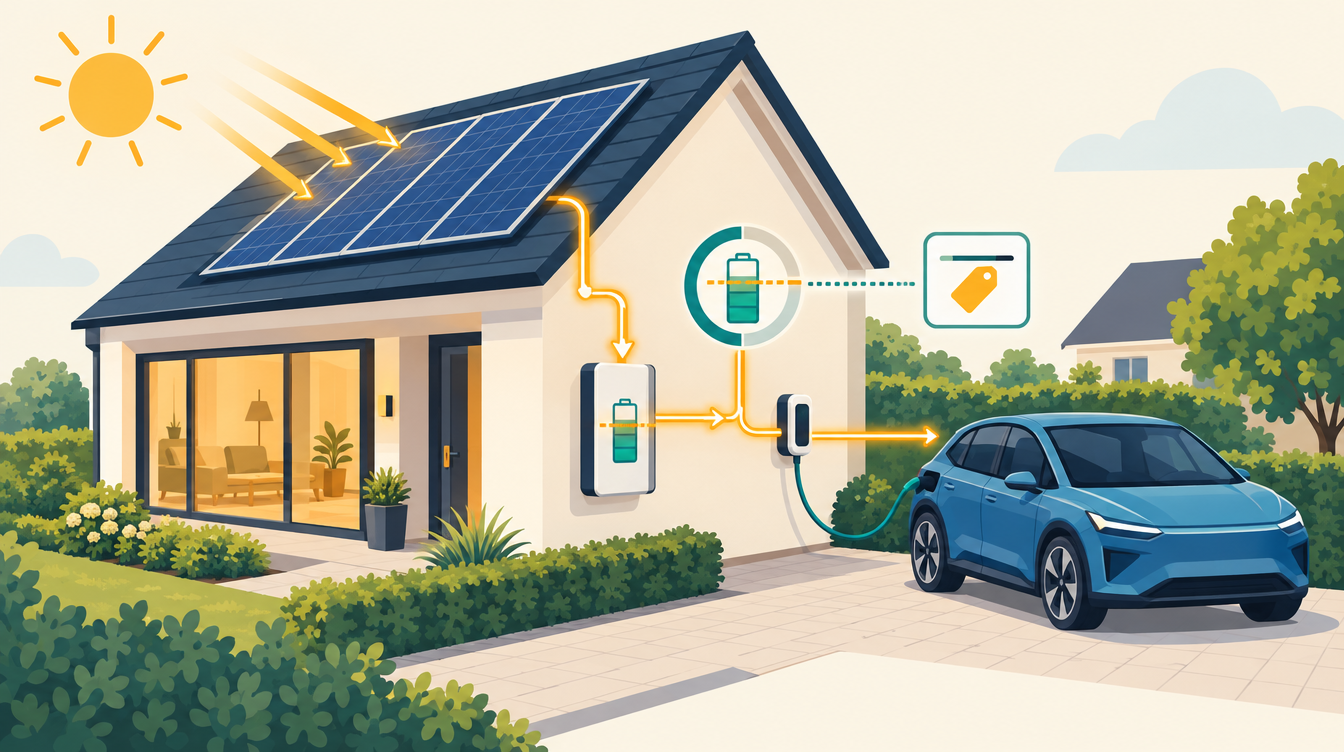
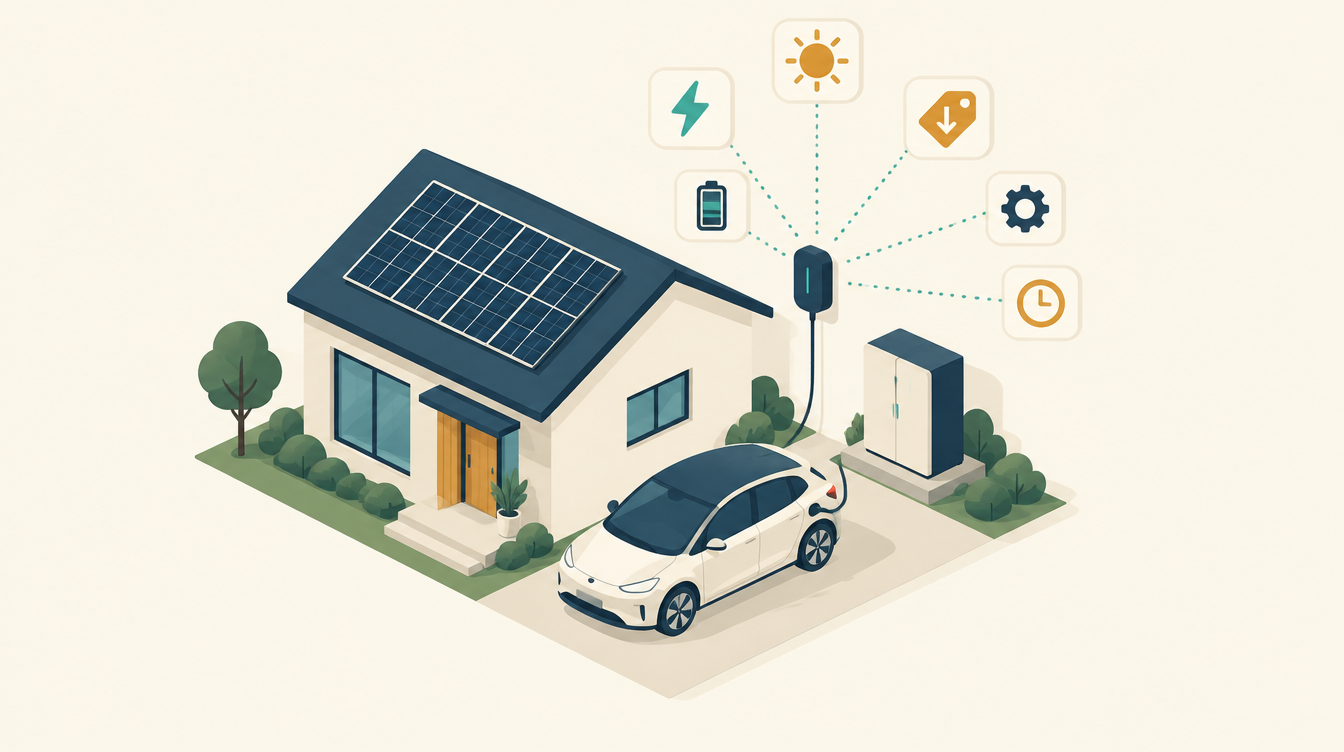
An electric car is the biggest consumer in the house. In a few hours it can use up a whole day of sunshine, or drain the home battery if nobody is watching. In my home, evcc controls the charger. What is evcc, and why don’t I just let EMHASS plan the car?
What is evcc?
evcc is free, open-source software that does exactly one thing: charge electric cars smartly. It talks to the charger, reads the meters in the house and possibly the car itself, and decides from moment to moment how much power the car gets. It works with many brands of chargers and cars, and runs locally: on its own small device, in Docker or as an add-on alongside Home Assistant.
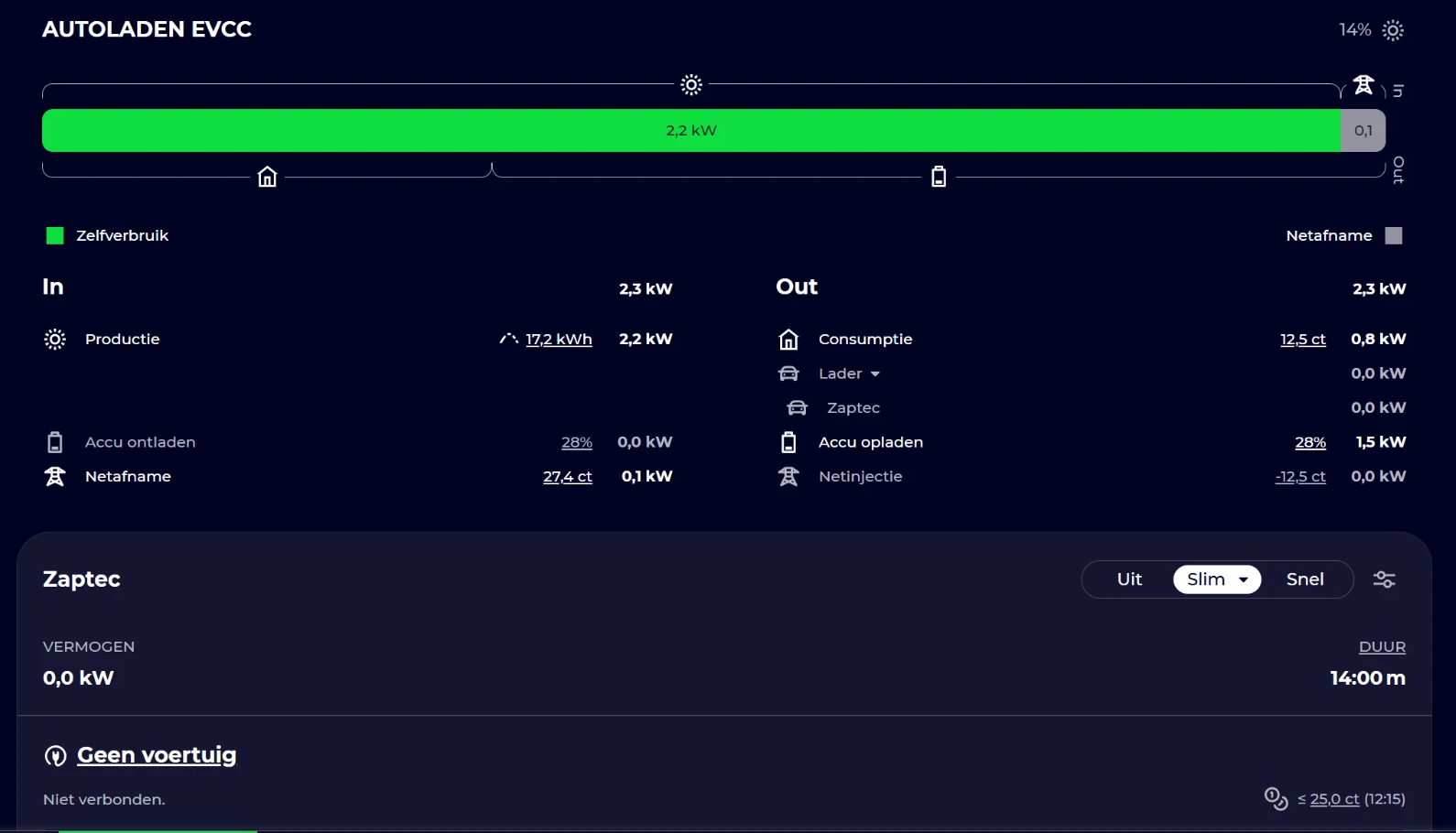
At the top, one bar shows where the power comes from and where it goes. Below that, the mode for each charge point. I have three:
- Off: no charging.
- Smart: evcc decides itself, based on solar surplus and the price limit. Under the arrow there are more variants of this mode.
- Fast: charge straight away at full power, regardless of sun or price.
You can see the price limit at the bottom right: “≤ 25.0 ct”. If electricity is cheaper than that limit, evcc also charges from the grid.
How I set it up
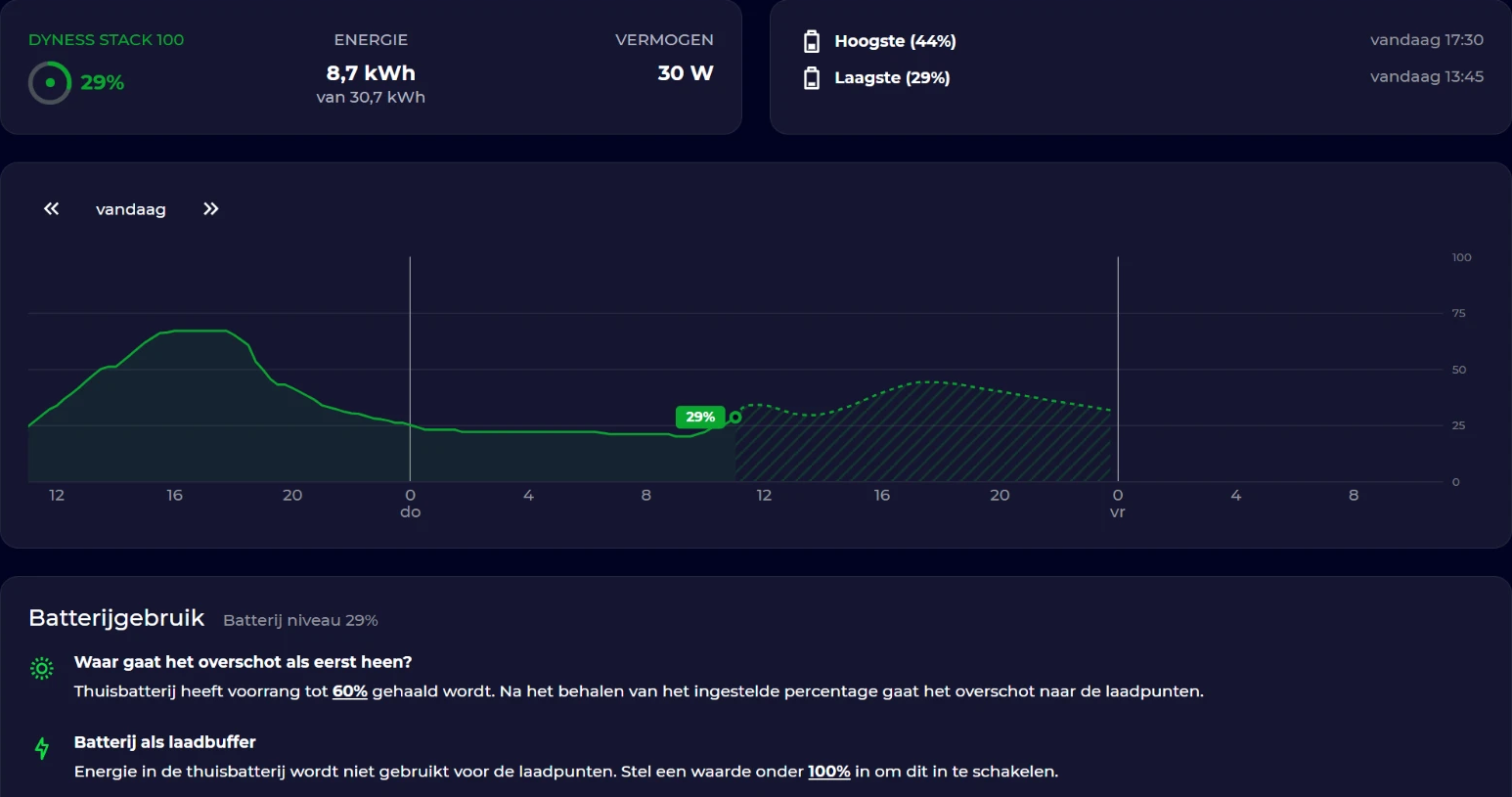
- The home battery as a meter, with priority up to 60%. If the battery is below 60%, solar surplus goes to the battery first. Above that, the car may have the surplus. evcc only reads the battery; it does not control it.
- The battery not as a charging buffer. evcc can also use the home battery to charge the car. I have that option switched off (set to 100%).
- A price limit of 25 cents per kWh. Below it, the car charges fully from the grid; above it, only on surplus.
- Load balancing on the charger itself, with the 25 A main fuse as the limit. That protection also works if Home Assistant or evcc is down.
What else evcc shows
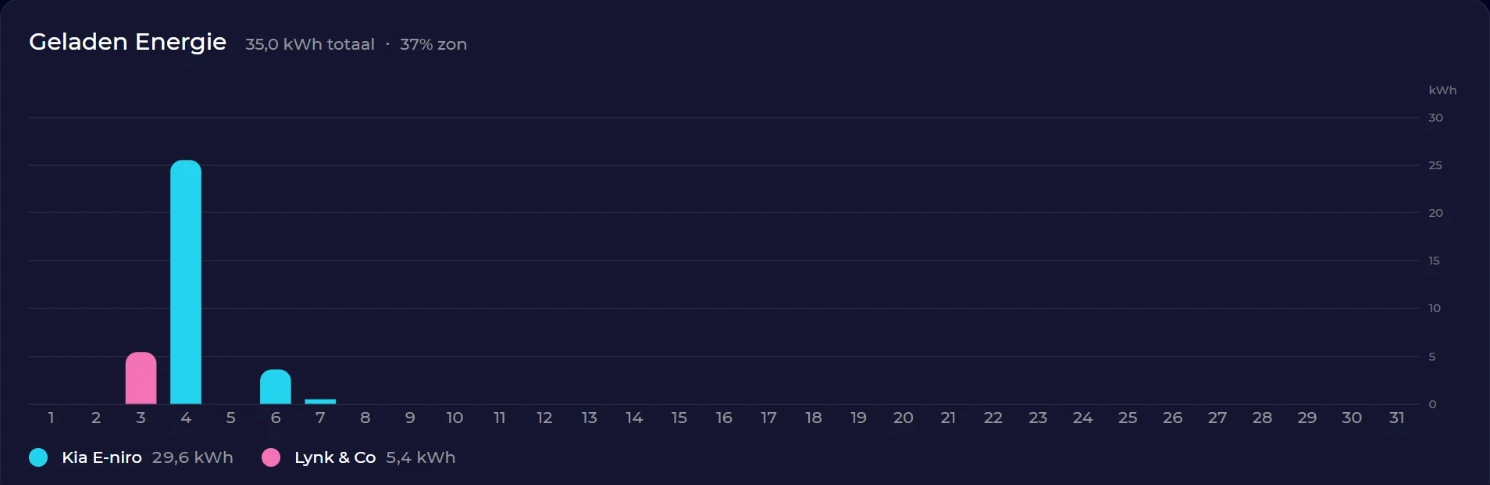
evcc keeps track per car of how much was charged, and how much of that came from solar. At our place two cars charge at the same charger: a Kia e-Niro and a Lynk & Co. In the first week of October 35 kWh went in, 37% of it solar: 29.6 kWh into the Kia and 5.4 kWh into the Lynk & Co.
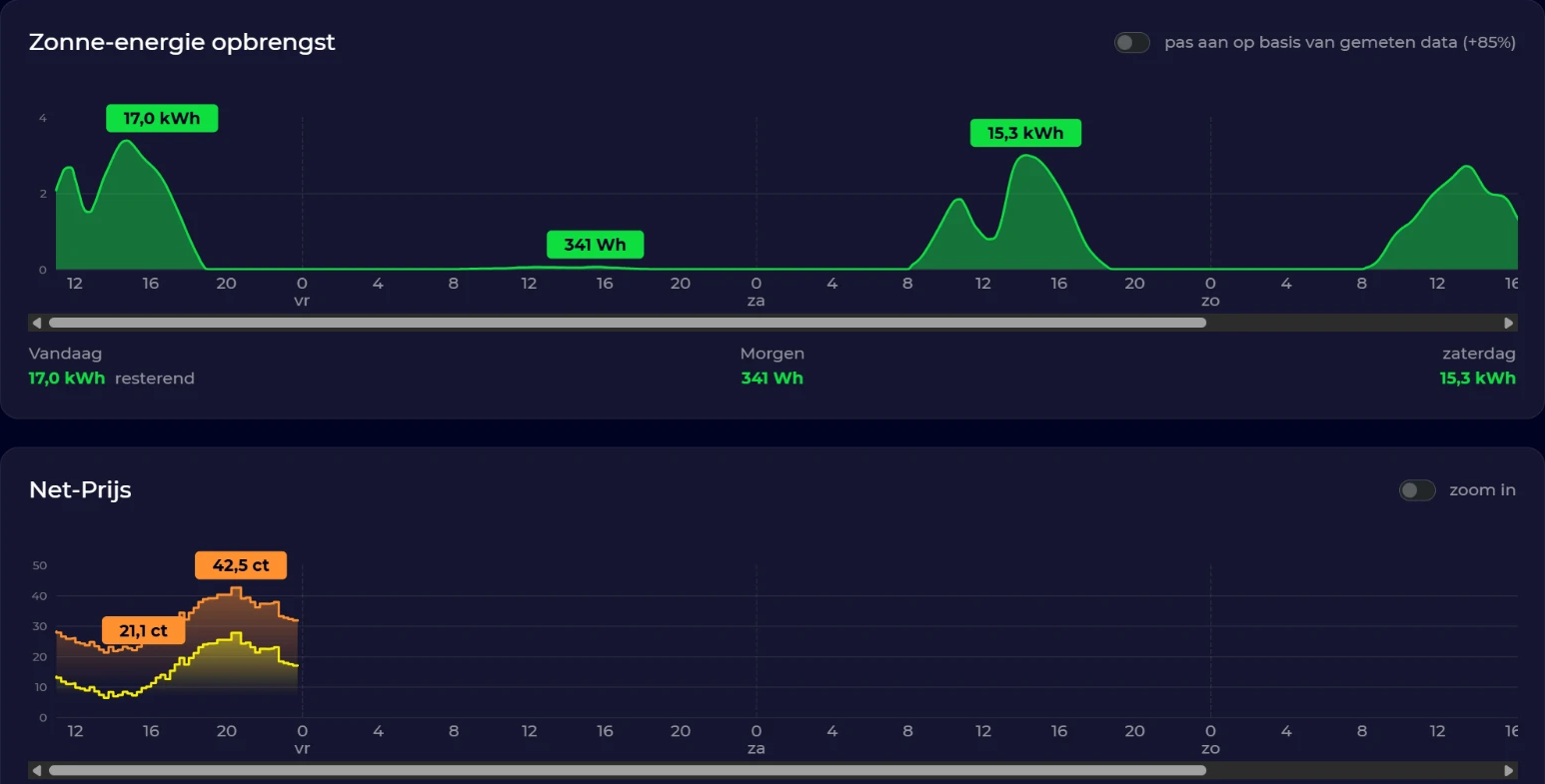
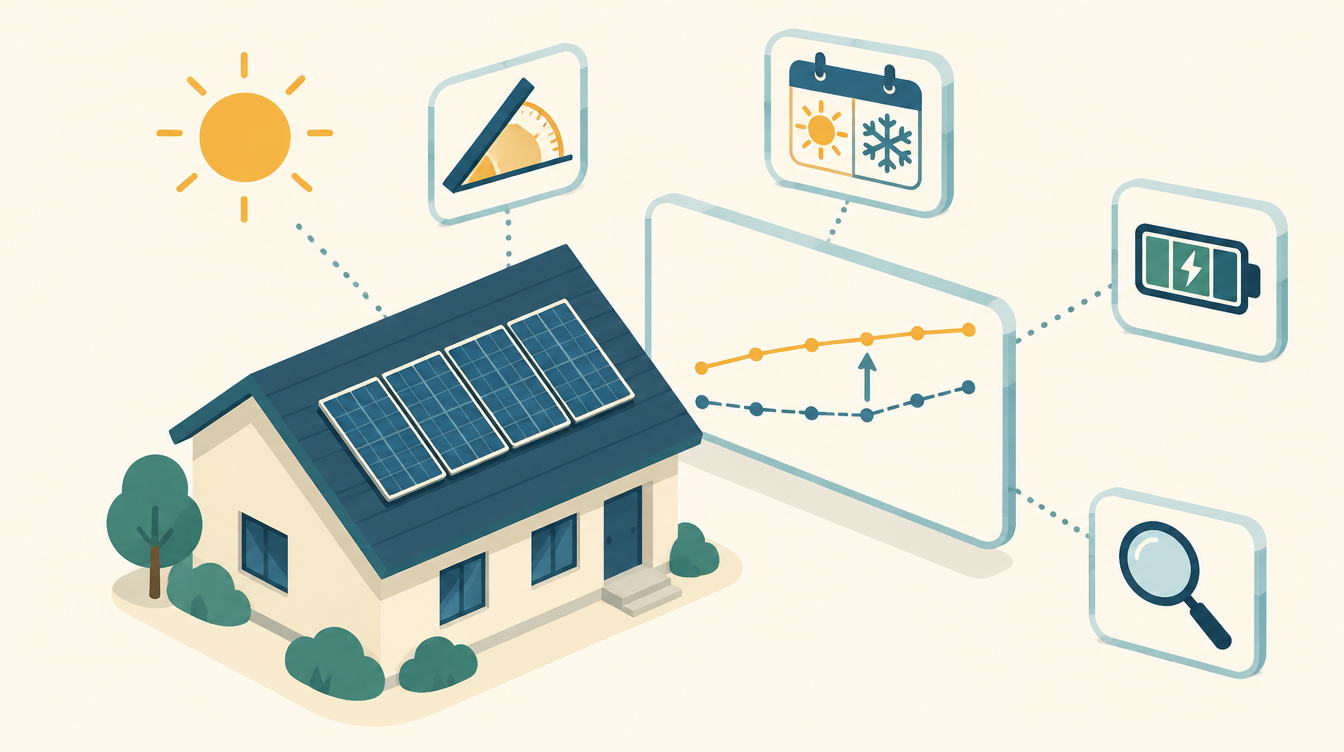
evcc also has its own forecast of solar and electricity price. Striking: based on measured data, evcc suggests raising the solar forecast by 85%. That matches what I also saw in Home Assistant: the actual solar output is clearly above the forecast. That switch is still off; I first want to see what the measurement loop in Home Assistant advises, so that EMHASS and evcc work with the same expectation.
Why not just EMHASS?
In theory EMHASS can also plan a car, as a flexible load. I deliberately chose not to do that:
- One owner per actuator. The charger has exactly one piece of software that writes to it: evcc. EMHASS and the translator keep their hands off the charger, evcc keeps its hands off the inverter.
- A car is not a predictable load. When it is home, how empty it is and when it has to leave again differs from day to day. Even more so with two cars on one charger. evcc responds to what is happening now; that fits better than a plan a day and a half ahead.
- evcc specialises in it. It knows the chargers and cars, the phases and the minimum charging currents. Building that yourself in Home Assistant is a lot of work for something that already exists.
As a result, the car does not exist for EMHASS. I filter the charging power out of the base load that EMHASS learns, so it does not plan consumption that actually belongs to the car. What the car draws only reduces the headroom on the grid connection.
The battery does not charge the car
I need that power myself in the evening, and sending it through the battery to the car only costs efficiency. That is why the “battery as charging buffer” option is off in evcc. But the charger sits behind the inverter, and the inverter follows the whole consumption, car included. So the translator also handles it on the inverter: when the car is charging, the battery may only cover the house, and the rest for the car comes from the grid. The roughly 3 A the battery then supplies is the house, not the car.
What makes it tricky
- Two systems have to know about each other. evcc only knows the battery as a meter; EMHASS does not know the car. The coordination lives in a few limits and in the base load. It works, but you have to understand it.
- Watch the units. evcc reports the charging power in kW, the integration of my charger in W. That mistake left the car in EMHASS’s base load for a few days: EMHASS thought my house used 6 kW at night.
- Sharing grid capacity. If the car and the battery both charge from the grid, the total has to stay below the connection limit. That is why the translator limits grid charging of the battery while a car is charging.
- Two solar forecasts. evcc and EMHASS each have their own expectation. If those diverge, they plan past each other.
Who is it for?
If you have an electric car and solar panels or a dynamic tariff, evcc is one of the first things I would install, even without a home battery. If you also have a battery, the priority and the charging buffer are the most important settings.
How it fits together in my home: Car and evcc. And about the brain of the rest of the house: What is EMHASS?
These experiences apply to one installation. Check settings against your own documentation; leave work on 230/400 V to a qualified electrician.
Leave a Reply