
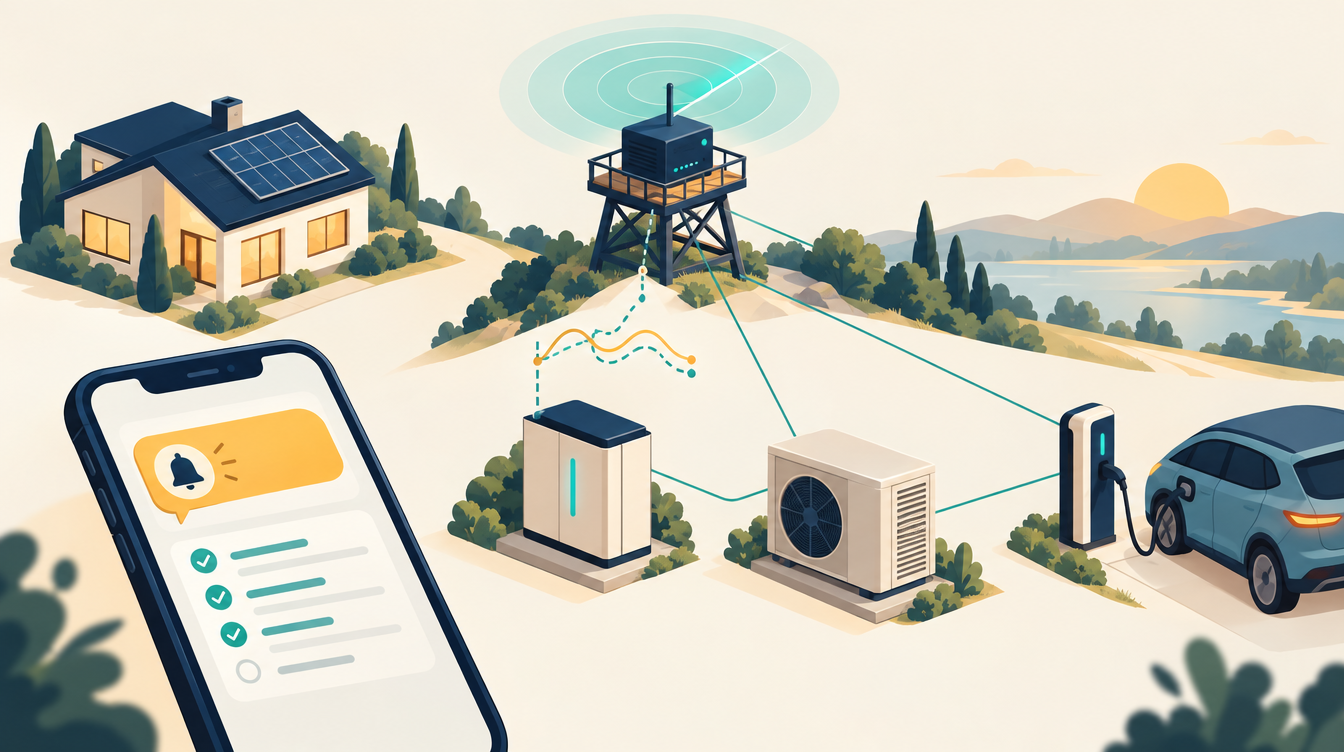
A system that decides every quarter of an hour what the battery and the heat pump do must also be able to tell you when it goes wrong. I would have spotted almost every incident from the first weeks sooner if a sensor had been watching. This is the Home Assistant energy monitoring that runs now.
1. Is the connection still alive?
Frozen values that look current are the most dangerous kind of error. When the Modbus connection to the heat pump was down for three days, Home Assistant kept showing the last values. Now a sensor reports whether the heat pump has been read in the last two minutes. If not, a warning appears at the top of the dashboard. How that works: Modbus values frozen without an error message.
2. Is the battery doing what the plan says?
A sensor compares the EMHASS plan with what actually happens. It triggers if the battery deviates for half an hour: grid power while the battery should be covering the house, or export that was not planned. It would have caught both incidents from the first week, the battery that exported itself empty and the expensive evening on Idle.
3. Is the plan still fresh?
If EMHASS fails, its sensors keep their last value. Without a check, you then execute yesterday’s plan. That is why the translator looks at the age of the plan: older than 45 minutes means a safe mode, with Zero Export, no grid charging and the battery only covering the house.
4. A message when it matters
- Morning and evening message on the phone: how much sun is expected, the cheapest block, the most expensive quarter-hour, and what yesterday delivered.
- Warnings for a plan that is not being followed, a manual mode that gets stuck, or frost.
An advisory agent that only watches
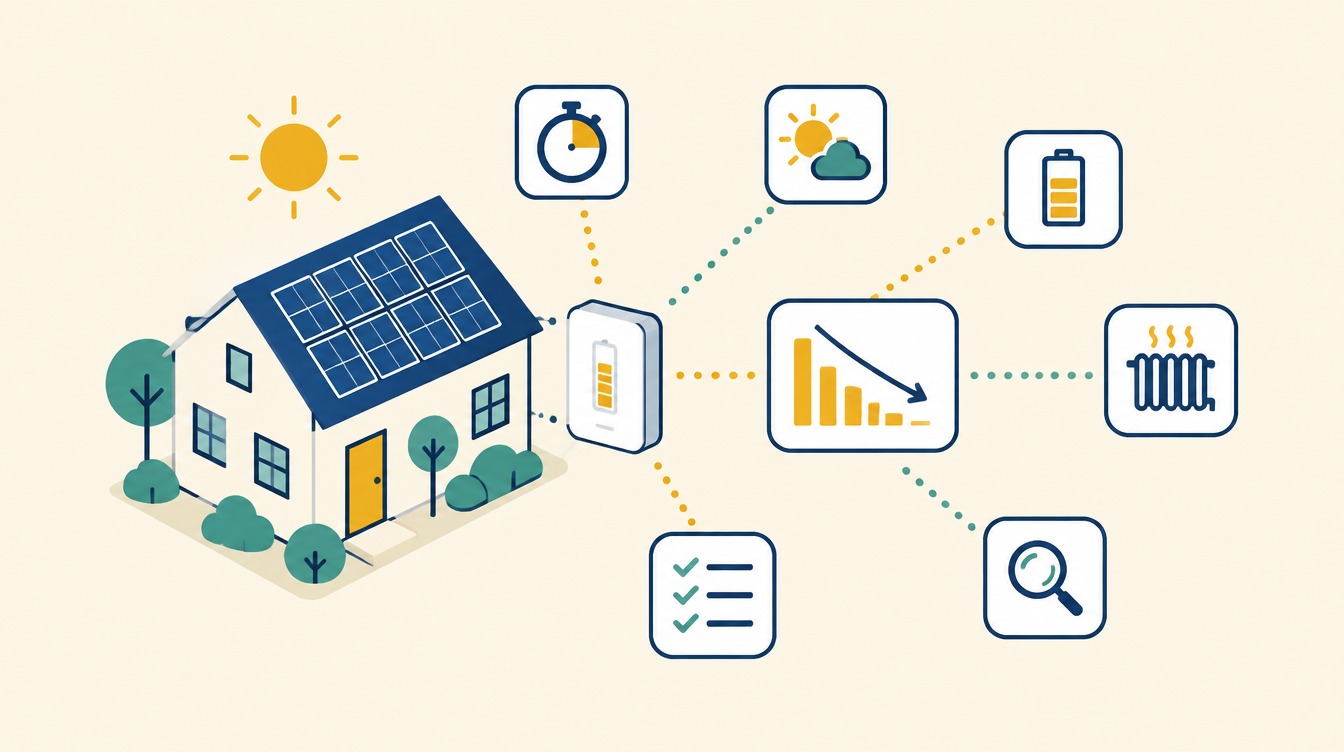
On top of that, an AI advisory agent (OpenClaw) runs with read-only access to Home Assistant. Every half hour it does one compact check: is the mode right, is the plan fresh, is EMHASS running, is Modbus alive, does the heat pump report an error, is it behaving strangely, and is there an opportunity being missed. It reports a deviation once, and again only if it gets worse.
Its most important rule: never write to the inverter or the heat pump, not even if someone asks. There is already an owner for that. An advisor that also starts controlling is exactly the second writer on one device that let the battery run empty in the first week.
The lesson for energy monitoring
Build the monitoring at the same time as the control, not afterwards. A sensor that says “something is not right here” is worth more than a nice dashboard that shows everything green.
The whole system: How it works. All incidents: Lessons from practice (in Dutch).
These values apply to one installation. Check them against your own documentation; leave work on 230/400 V to a qualified electrician.
Leave a Reply